Trending right now

World Collapse Expert (Ian Bremmer): The Real Crisis Is What Comes After Trump
Is the world on the brink of collapse, and what comes next after a seismic shift in global leadership? Ian Bremmer lays out the stark reality.

Alex Imas on Why Economists Might Be Getting AI Wrong
Are economists miscalculating AI's true impact? Discover why the speed of adoption and job task interconnectedness could reshape our economic future faster than we think.

Our Tax System Should Make You Furious
Is the tax system rigged against you? This episode reveals how the ultra-wealthy pay minimal taxes while you pick up the tab.

#240 - Project Glasswing, Claude Mythos, GLM-5.1, emotion concepts
From AI finding zero-day vulnerabilities to data centers becoming military targets – the latest AI news is stranger and more critical than fiction.

Gadget Prices Are Getting Ridiculous
Are you feeling the pinch of rising gadget prices? MKBHD dives into why your favorite tech is getting ridiculously expensive.

The Aussie Man Who Used AI To Create A Cancer Cure For His Dog
- A non-doctor used AI tools like ChatGPT and AlphaFold to analyze his dog's tumor DNA and develop a personalized cancer vaccine.
- The experimental mRNA vaccine, created with university scientists, resulted in a significant 50% tumor reduction for the dog.
- This case highlights the potential of AI and personalized medicine in revolutionizing cancer treatment approaches.

She Survived Being Shot, Bombed And Working At Google - EP 58 Anna Prouse
- The speaker recounts harrowing near-death experiences in Iraq, including an ambush by her bodyguard and surviving rocket attacks, highlighting her resilience and capacity for quick decision-making under extreme duress.
- The conversation delves into the complexities of rebuilding infrastructure and governance in post-invasion Iraq, emphasizing the importance of building trust and understanding local cultures over imposing external solutions.
- The speaker shares her experiences navigating diplomatic and political landscapes in the Middle East, demonstrating a unique ability to build rapport with diverse factions and advocate for pragmatic, human-centered approaches to international engagement.

He Left OpenAI To Think Bigger - EP 53 Jerry Tworek
- Jerry Torrek discusses the challenges of innovation within large AI labs competing in a high-stakes race for the best models, leading to a focus on incremental improvements rather than radical breakthroughs.
- He expresses concern about the lack of diversity in current AI research approaches, with most major labs pursuing similar scaling strategies for transformer architectures.
- Torrek highlights two under-resourced areas for future research: architectural innovation beyond transformers and the development of continual learning to enable models to learn and adapt continuously like humans.

Is The Era Of AI-Designed Drugs Actually Here? - EP 50 Josh Meier and Jack Dent
- Chai Discovery is leveraging language models to revolutionize biology, aiming to transform it from a science into an engineering discipline by predicting and designing novel molecules like antibodies.
- The company has achieved significant breakthroughs with its AI models, drastically reducing the time and increasing the success rate for discovering drug-like molecules compared to traditional brute-force methods.
- These advanced AI models are not just optimizing existing drug discovery processes but are enabling the exploration of previously "undruggable" targets, potentially leading to entirely new classes of medicines.

America Has A Steel Start-Up. Yes, Really - EP 47 Laureen Meroueh
- Hera Metals has developed a novel, single-step steelmaking process that uses natural gas as a reducing agent, offering significant reductions in cost (up to 30%) and emissions (at least 50%) compared to traditional methods.
- The company's innovative "Flex HRSE" (Flexible Fuel Hydrogen Electric Reduction Smelting) technology allows for the use of various iron ore grades, including lower-quality ores and waste oxides, and is adaptable to hydrogen as a fuel source.
- Hera Metals is also positioned to address supply chain vulnerabilities in the US by producing high-purity iron essential for rare earth magnets, a critical component for defense systems and clean energy technologies.

OpenAI's Research Chief On The Soup Wars, Poker And The Next Models - EP 46 Mark Chen
- Intense talent recruitment: OpenAI and Meta are engaged in aggressive, even personal, recruitment efforts for top AI talent, with stories of executives personally delivering soup to potential hires.
- Focus on research vision over competition: OpenAI prioritizes long-term research breakthroughs and developing novel paradigms rather than reacting to competitor benchmarks or engaging in a dollar-for-dollar talent war.
- Emerging AI capabilities in science and problem-solving: The conversation highlights AI's growing ability to generate novel scientific knowledge, solve complex mathematical and coding problems, and the potential for AI to revolutionize scientific discovery.

Aliens, AI, and Saving the Planet - EP 43 Will Marshall
- In the next decade, humanity may witness three significant advancements: the development of Artificial General Intelligence (AGI), the discovery of life beyond Earth and the decoding of animal communications.
- The increasing power and size of telescopes, particularly space-based ones like JWST, are enabling the analysis of exoplanet atmospheres, making the detection of potential biosignatures, such as oxygen, a realistic prospect within the next ten years.
- The development of AI, especially large language models (LLMs) and multimodal models, is revolutionizing the analysis of satellite imagery by enabling natural language queries for real-time earth data, thereby accelerating insights in fields like agriculture, sustainability, and security.

We Shall Finally Map The Brain - EP 36 Andrew Payne
- E11 Bio is developing technologies to map mammalian brains by making each neuron a unique color through a process that utilizes viral vectors to deliver a stochastic combination of 18 protein variants to each neuron, theoretically allowing for 262,000 unique markers to be identified.
- A major current bottleneck in connectomics is manual neuron tracing through electron microscopy images, but E11's multi-color barcoding and expansion microscopy techniques, as detailed in their recent pre-print study, improve neuron tracing accuracy by approximately an order of magnitude.
- The development of cheaper connectomics techniques could transform the understanding and treatment of brain disorders by allowing researchers to study wiring diagram differences between healthy and disordered brains, potentially uncovering therapeutic targets in cases where genomics alone has fallen short.

This Is: How Neuralink Builds A Head
- Fran Romano and the Neuralink surgery engineering team create highly realistic, patient-specific 3D models called "proxies" to mimic human anatomy for neurosurgical practice.
- These proxies are created using a variety of techniques, including 3D printing, silicone molding, and hydrogel freezing, utilizing patient CT and MRI scans to ensure anatomical accuracy.
- The use of these proxies allows neurosurgeons to practice complex procedures on a realistic model of a patient's brain before the actual surgery, aiming to reduce surprises and improve surgical outcomes.
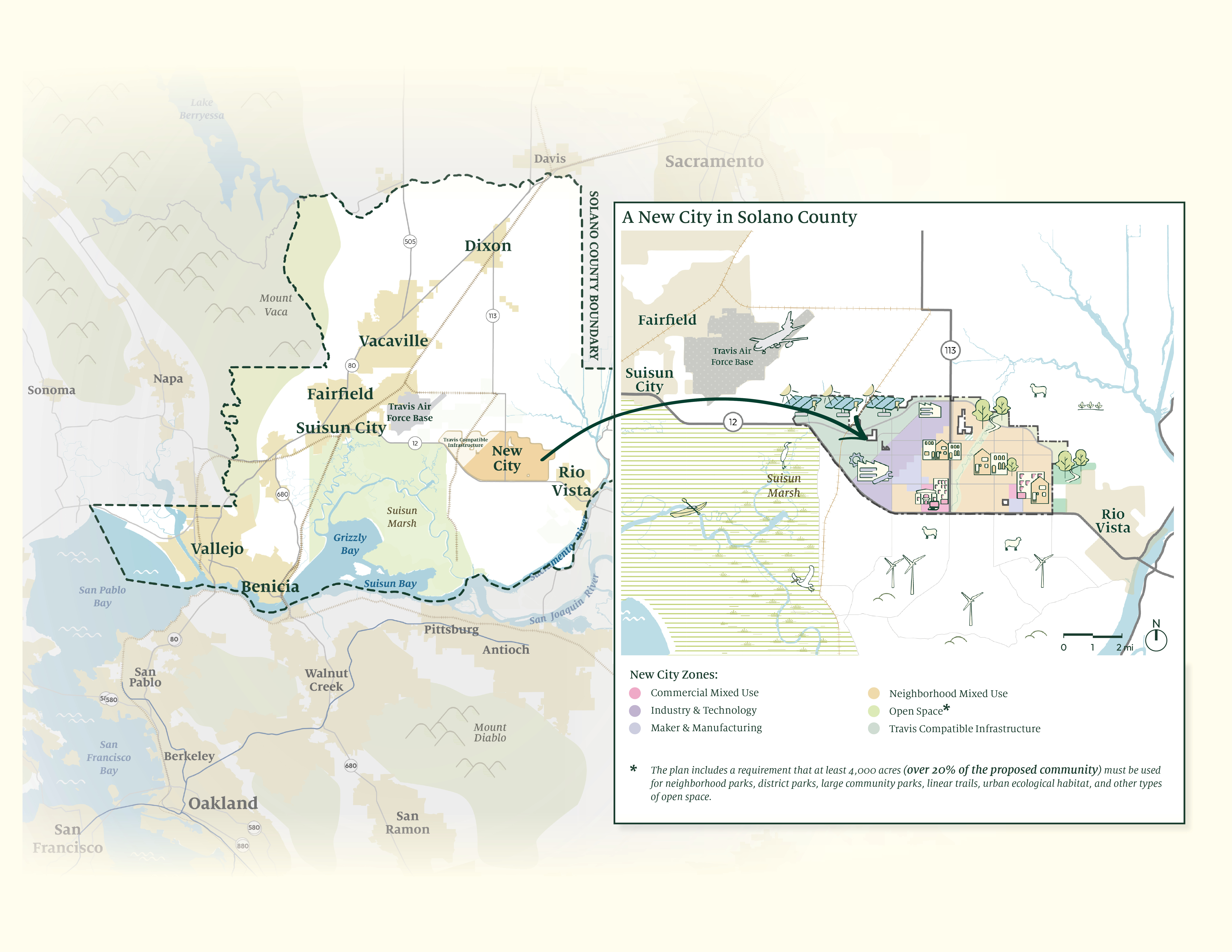
Can California Ever Build Again?
- California's housing market is showing warning signs due to a surge in inventory, with Los Angeles listings nearing decade-high levels.
- Home prices in California are beginning to decline statewide as a direct result of the high cost of buying, with typical home values exceeding $700,000.
- High mortgage rates are exacerbating affordability issues, pushing the average monthly payment in California to approximately $5,100 - significantly more than other states.