Trending right now

World Collapse Expert (Ian Bremmer): The Real Crisis Is What Comes After Trump
Is the world on the brink of collapse, and what comes next after a seismic shift in global leadership? Ian Bremmer lays out the stark reality.

Alex Imas on Why Economists Might Be Getting AI Wrong
Are economists miscalculating AI's true impact? Discover why the speed of adoption and job task interconnectedness could reshape our economic future faster than we think.

Our Tax System Should Make You Furious
Is the tax system rigged against you? This episode reveals how the ultra-wealthy pay minimal taxes while you pick up the tab.
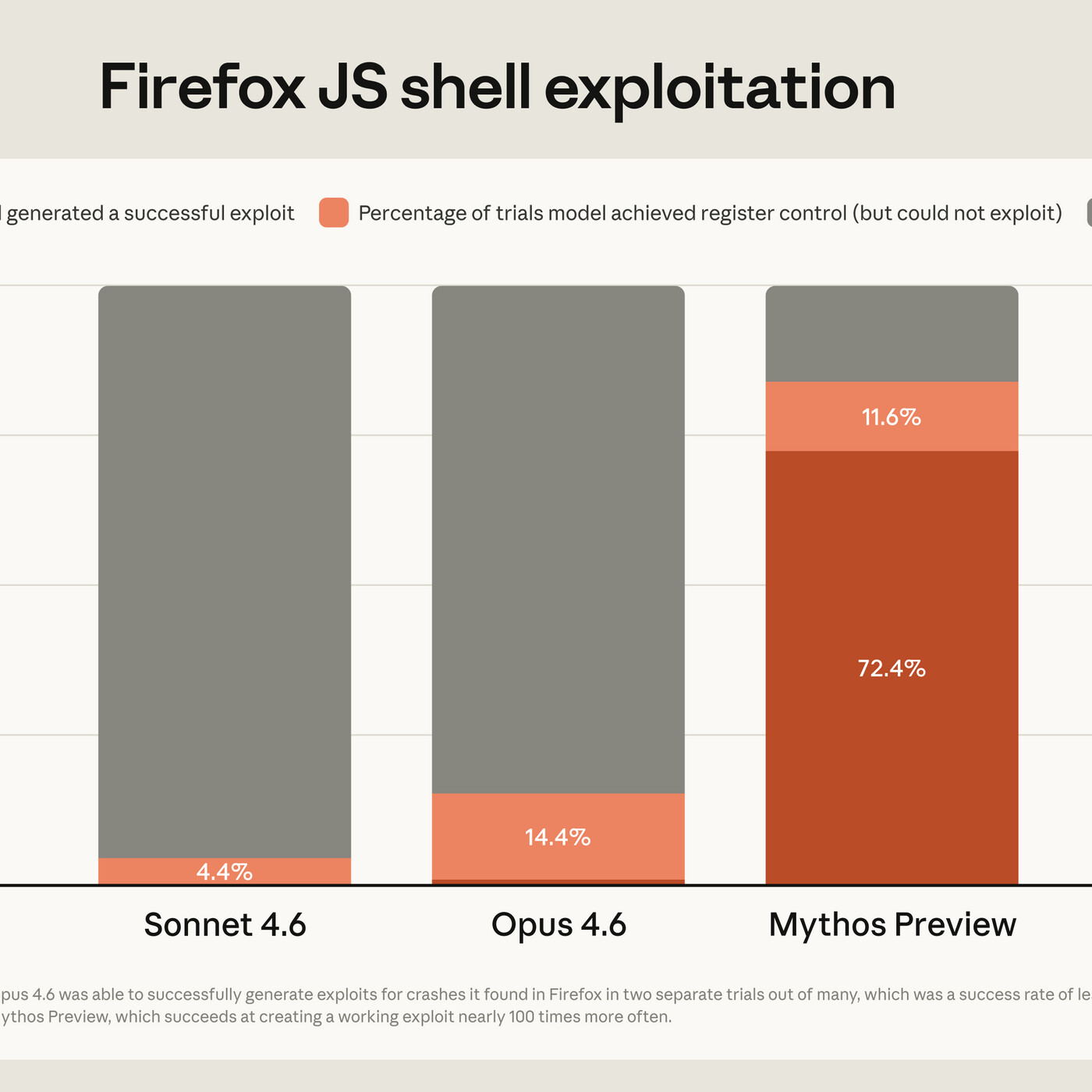
#240 - Project Glasswing, Claude Mythos, GLM-5.1, emotion concepts
From AI finding zero-day vulnerabilities to data centers becoming military targets – the latest AI news is stranger and more critical than fiction.

Gadget Prices Are Getting Ridiculous
Are you feeling the pinch of rising gadget prices? MKBHD dives into why your favorite tech is getting ridiculously expensive.
The AI Model Built for What LLMs Can't Do
- Energy-Based Models (EBMs) offer a fundamentally different approach to AI by avoiding tokenization and autoregression, allowing for more efficient and verifiable decision-making compared to LLMs.
- EBMs utilize an "energy landscape" concept derived from physics, where probable scenarios are mapped to low-energy states, enabling AI to understand and navigate complex data more intuitively.
- Unlike the "black box" nature of LLMs, EBMs provide built-in explainability and control through internal verifiers and self-alignment, making them suitable for mission-critical applications requiring high correctness and deterministic outcomes.
We Gave Every Employee an AI Agent. Here's What Happened.
- Personal AI agents, known as "claws" or "plus ones," become personalized reflections of their users, adopting their traits and improving trust through direct interaction.
- A significant shift in workflow occurs when personal AI agents are used for both everyday "computer errands" and complex work tasks, including managing emails and collaborating on projects.
- The emergence of specialized AI agents within an organization creates a parallel organizational structure, with each agent reflecting the skills and personality of its human counterpart, leading to emergent collaboration patterns.
If SaaS Is Dead, Linear Didn't Get the Memo
- Linear embraced an "agent-native" approach by focusing on workflows and building an open platform where external and homegrown agents can plug in.
- The company prioritizes quality and impact over vanity metrics for AI adoption, focusing on revenue, retention, and product quality, and maintaining a robust bug process.
- Their philosophy is to "go slow to choose the right problem" and then "go fast" with tight execution loops once a decision is made.
We Made a Document Editor Where Humans and AI Work Side by Side
- Proof is a newly launched, open-source, real-time browser editor designed for collaborative co-writing between humans and AI agents.
- The platform emphasizes agent-native design by allowing agents with deep context to securely explore document branches and execute plans.
- Proof facilitates a zero-friction workflow for various tasks, from drafting and debugging to managing to-do lists and summarizing information.
Meet the Slowest Startup Incubator in the World—Pumping Out Billion-dollar Companies
- The strategy of building "AI durable" companies leverages AI as an accelerant for established business models rather than creating entirely new AI-native ones.
- AI is proving most transformative in the early stages of company discovery and customer research, aiding in idea generation and hypothesis validation.
- The "slowest incubator" model focuses on building and de-risking businesses to a significant revenue point before bringing in new leadership, emphasizing operational efficiency and real-world problems.
Meet the Student With No Teachers, No Homework—Just AI
- Alpha High School offers a personalized, AI-powered learning experience where students have agency in their academic path and can negotiate their curriculum.
- The younger generation's view on AI is complex, with a mix of pessimism, uncertainty, and optimism, often driven by factors like environmental concerns, job security, and the desire for companionship.
- The conversation highlights a shift in how young people approach education and careers, with increased emphasis on personalized projects, entrepreneurial ventures, and exploring alternative post-secondary paths beyond traditional college.

How Andrew Wilkinson Uses Opus 4.5 in His Work and Life
- The rapid advancement of AI, particularly models like Claude 4.5, is drastically lowering the barrier to entry for software development, potentially making traditional programming roles obsolete within a few years.
- AI is enabling rapid and creative personal project development, demonstrated by the creation of a sophisticated relationship diagnostic tool and a personalized AI styling assistant, allowing individuals to manifest complex ideas quickly.
- The fundamental nature of software businesses is shifting; with coding becoming virtually free, competitive advantage will rely on factors beyond technical execution, such as brand, distribution, or hardware lock-in.
Why Your AI Learning Projects Keep Fizzling Out
- Obo is designed as a dedicated learning platform, differentiating itself from general-purpose LLMs like ChatGPT by focusing on structured educational experiences.
- True learning is considered fundamentally multimodal and often passive, requiring content to be presented in various formats rather than solely through active, one-on-one interaction.
- Obo aims to bridge the gap between users' learning objectives and their ability to achieve them by providing a guided, objective-driven path with achievable milestones and adaptive learning materials.
Vibe Check: Claude Cowork Is Claude Code for the Rest of Us
- Claude Co-work is designed for non-technical users, offering an asynchronous way to work with AI that can perform longer, deeper tasks on your computer than traditional chat interfaces.
- The new tool features an agent-native architecture, where an agent is directly wired to the app's user interface, allowing for more complex operations than rule-based software.
- Co-work aims to bring the capabilities of Claude Code to a broader audience by providing a less intimidating and more accessible interface for tasks like data analysis, research, and document creation.
AI in 2026: Reid Hoffman’s Predictions on Agents, Work, and Creation
- In 2026, expect a significant increase in the parallelization of work, allowing tasks to run independently and productively in the background.
- The focus will shift from merely chatbots to full-fledged agents capable of performing tasks, moving beyond simple dialogue to active amplification and execution.
- Enterprises will need to adopt the practice of recording every meeting and utilizing AI agents on them to amplify workflows, a capability that will become essential for growth.