Trending right now

World Collapse Expert (Ian Bremmer): The Real Crisis Is What Comes After Trump
Is the world on the brink of collapse, and what comes next after a seismic shift in global leadership? Ian Bremmer lays out the stark reality.

Alex Imas on Why Economists Might Be Getting AI Wrong
Are economists miscalculating AI's true impact? Discover why the speed of adoption and job task interconnectedness could reshape our economic future faster than we think.

Our Tax System Should Make You Furious
Is the tax system rigged against you? This episode reveals how the ultra-wealthy pay minimal taxes while you pick up the tab.
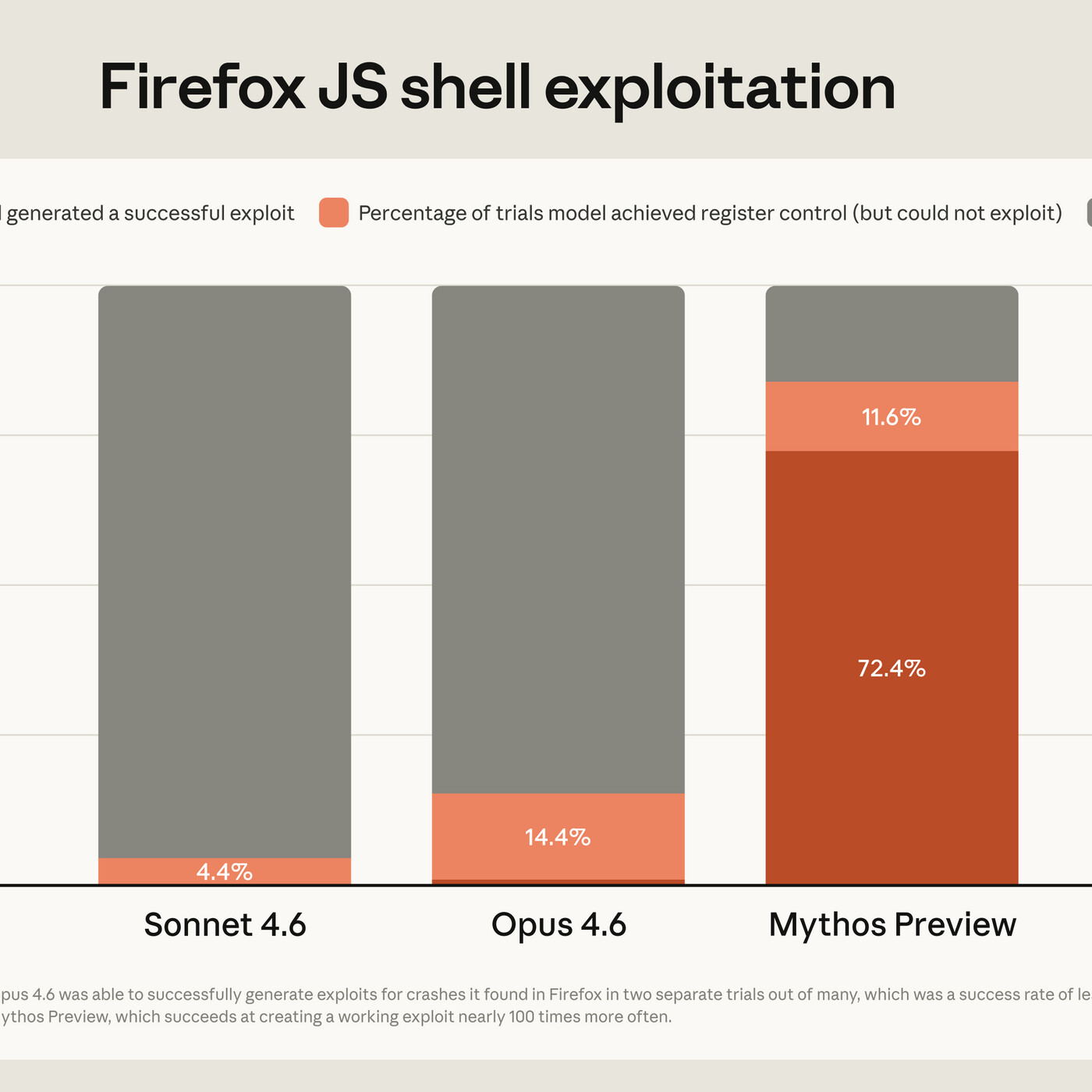
#240 - Project Glasswing, Claude Mythos, GLM-5.1, emotion concepts
From AI finding zero-day vulnerabilities to data centers becoming military targets – the latest AI news is stranger and more critical than fiction.

Gadget Prices Are Getting Ridiculous
Are you feeling the pinch of rising gadget prices? MKBHD dives into why your favorite tech is getting ridiculously expensive.

Scaling Global Organizations in the Age of AI with ServiceNow CEO Bill McDermott
- Enterprises are more likely to adopt AI by integrating it with existing workflow platforms rather than attempting to replicate complex functionalities with standalone language models, as demonstrated by Service Now's approach.
- The increasing integration of AI agents into business operations will significantly enhance productivity, leading to a reduction in the need for increased headcount and a shift towards more critical human roles focused on innovation and relationship building.
- Leadership in the current dynamic environment requires embracing change as an opportunity, fostering human connection, and maintaining a strong customer focus, as human interaction and trust remain paramount even with technological advancements.
The Agentic Economy: How AI Agents Will Transform the Financial System with Circle Co-Founder and CEO Jeremy Allaire
- Circle is developing dollars on the internet as a "full reserve" form of money, aiming to create a safer and more accessible financial system.
- Agentic economies, driven by AI agents, require new financial infrastructure for direct, programmable, and scalable interactions.
- Tokenization of real-world assets, such as stocks and money markets, is rapidly advancing on blockchains, enabling broader access and new financial instruments.

AI for Atoms: How Periodic Labs is Revolutionizing Materials Engineering with Co-Founder Liam Fedus
- Periodic Labs is building an AI foundation lab for atoms to impact the physical world in areas like material sciences and chemistry.
- The widespread success of Large Language Models like ChatGPT demonstrates the power of AI, but future advancements in science and technology require connecting these systems to the physical world through experimental data and closed-loop systems.
- The future of AI development, both in software and potentially physical sciences, will likely involve increasing levels of self-improvement, though domain-specific knowledge and experimental feedback remain critical.

From Coder to Manager: Navigating the Shift to Agentic Engineering with Notion Co-Founder Simon Last
- Notion's evolving vision is to be a platform for humans and AI agents to collaborate, shifting from directly enabling human work to managing agents that perform tasks.
- The company has embraced AI by developing features like an AI writer, Q&A with semantic indexing, and increasingly autonomous custom agents that can learn and act on tasks.
- Engineering practices at Notion are being transformed by AI, with a shift towards using coding agents to build and verify software, leading to increased ambition and individual output for engineers.

How Capital is Powering the AI Infrastructure Buildout with Magnetar Capital Managing Director Neil Tiwari
- Magnetar Capital, an alternative asset manager, is at the forefront of financing the AI compute buildout by leveraging creative financial structures for capital-intensive businesses.
- The AI compute sector faces significant capital expenditure challenges, projected to reach trillions of dollars, necessitating innovative financing beyond traditional equity to scale efficiently.
- Newer financing structures for AI compute prioritize contracted cash flows from investment-grade counterparties as primary collateral, rather than solely relying on depreciating GPU assets.

From SaaS to AI-First: How Companies Are Reshaping Innovation
- The perceived "SAS apocalypse" is largely an overstatement, with current AI advancements primarily impacting specific types of software and not signaling the demise of all SaaS companies.
- The rapid acceleration of AI development has drastically compressed the time it takes for companies to reach significant revenue milestones, a trend unprecedented in software history.
- Founders should proactively consider exit strategies due to the accelerated pace of technological change, which can quickly shift market dynamics and a company's position, much like during the dot-com era.

Rivian’s Roadmap to AI Architecture and Autonomy with Founder and CEO RJ Scaringe
- By 2030, it will be standard for all cars to have high levels of autonomy, driven by advancements in AI architectures rather than older rules-based systems.
- Rivian's strategy prioritizes vertical integration for autonomy, including proprietary chips and control over the perception and training loop, believing this is crucial for future success.
- The current lack of choice in the EV market, beyond Tesla's dominant offerings, is identified as a primary reason for slower adoption, with companies needing to offer diverse and unique alternatives.

Why Cryopreservation is No Longer Science Fiction with Until Co-founder and CEO Laura Deming
- The company Until is working on reversible cryopreservation, beginning with human organs for transplant and aiming for whole-body hibernation for medical purposes.
- A key scientific challenge in cryopreservation is preventing ice formation, which causes significant tissue damage, but it's being addressed by manipulating nucleation rates and minimizing time in critical temperature ranges.
- The immediate product focus is on cryopreserving organs to eliminate timing constraints in transplantation, effectively "pausing time" for organs to ensure better matches and patient care.

No Priors Live: Building Durable Software in the AI Age with MongoDB President & CEO CJ Desai
- Platforms, not just products, are key to long-term software company success and stickiness.
- Speed and adaptability are crucial for navigating technology transitions, especially with the rise of AI.
- While AI offers innovation, the core data layer and platforms that enable robust enterprise-class applications remain vital.
AI and the Future of Warfare with US Under Secretary of War Emil Michael
- The Department of War is rapidly integrating AI into its operations, focusing on enterprise efficiencies, intelligence analysis, and warfighting capabilities, exemplified by the quick deployment of a generalized AI platform for millions of users.
- There's a significant push to revitalize the defense industrial base to counter the biggest military buildup in world history by China, encouraging new entrants and shifting procurement to problem-solution approaches rather than rigid requirements.
- The department is actively seeking to de-risk and accelerate innovation by streamlining contracting processes, offering flexible funding, and focusing on key strategic technologies like scaled hypersonics and directed energy.